
Quick Answer
Build a Layered USB Data Protection Workflow
Confidentiality
Place sensitive files inside the secure area rather than relying on filenames or hidden attributes.
Availability
Maintain another verified copy because encryption cannot repair failed flash memory or deleted files.
Safe handling
Close the mounted private drive and safely eject the hardware before unplugging it.
Protect USB Data with a Public and Private Area
Inventory and back up the USB drive
List confidential and public files, then copy important data to independent storage.
Confirm the target device
Match the drive letter, label, and capacity before selecting the USB disk.
 Confirm the correct device and allocate public and secure capacity.
Allocate the secure area
Choose how much capacity belongs to private storage and how much remains public.
Create the password
Install the secure area with a strong unique password and keep the device connected.
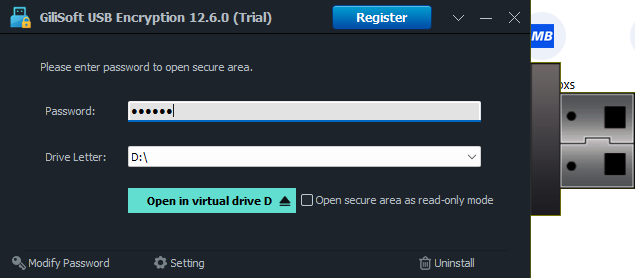 Open the secure area through a password-mounted drive letter.
Move confidential files
Open the mounted secure drive and move sensitive data inside it, checking for exposed duplicates.
Close and verify
Close, safely eject, reconnect, and confirm private files require authentication.
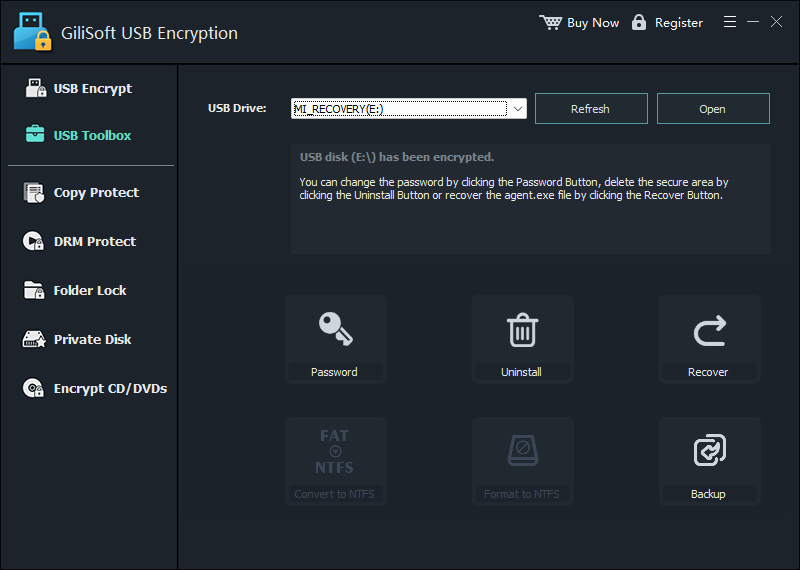 Review management and recovery options before relying on the device.
Verify More Than the Password Prompt
Public boundary
Confirm only intentionally shareable files remain visible.
Private boundary
Search public storage for sensitive names, exports, and duplicate copies.
Destination PC
Test the exact Windows computer and account that will receive the drive.
Recovery
Confirm the recovery method is stored separately and remains readable.
Common Mistakes
- Treating encryption as a substitute for backup.
- Leaving confidential duplicates in the public area.
- Saving passwords or recovery instructions on the same USB drive.
- Leaving the private drive mounted on an unattended computer.
- Assuming encryption scans malware or blocks copying after unlock.
- Removing the device before closing the secure area.
Frequently Asked Questions
Can I protect only part of a USB drive?
Yes. A secure-area workflow can retain public storage while private files stay behind a password.
Does password protection stop USB failure?
No. Keep a separate backup because flash memory, controllers, connectors, and file systems can still fail.
Are files in the public area protected?
No. Public-area files remain intentionally accessible without opening the secure area.
Can another Windows PC open the private area?
Only if the destination supports the workflow and the user has the required password or recovery information.
Does encryption prevent malware?
No. Use endpoint protection, approved devices, and safe file handling separately.
What should I do before sharing the USB drive?
Close the secure area, reconnect the device, inspect public storage, and test the intended recipient workflow.