Back up important files
Keep an independent backup and record your password somewhere safe. Confirm the selected disk before starting encryption or decryption.

Learn how to encrypt Windows disks and USB drives, change passwords, and prepare recovery media with GiliSoft Full Disk Encryption.

Keep an independent backup and record your password somewhere safe. Confirm the selected disk before starting encryption or decryption.
Create the GiliSoft LiveCD before encrypting the Windows system partition. Keep the computer connected to power throughout the operation.
Create the recommended bootable LiveCD or recovery media before encrypting the system partition. Keep it available in case Windows cannot start normally.
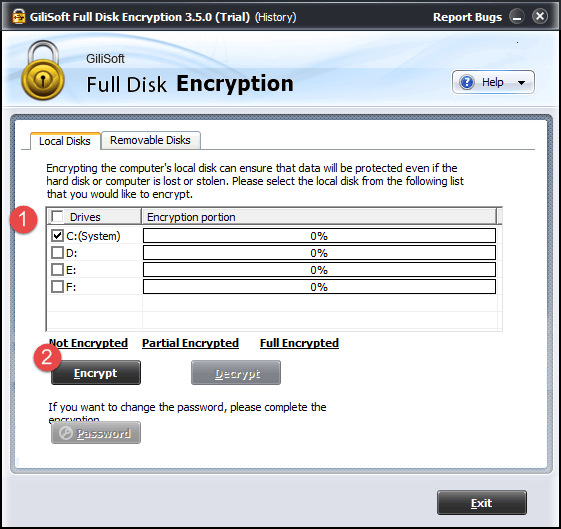
Open GiliSoft Full Disk Encryption and select the system drive or other local disks in the Local Disks window.
Click Encrypt, create a strong password, confirm the target, and allow the operation to finish without shutting down the computer.
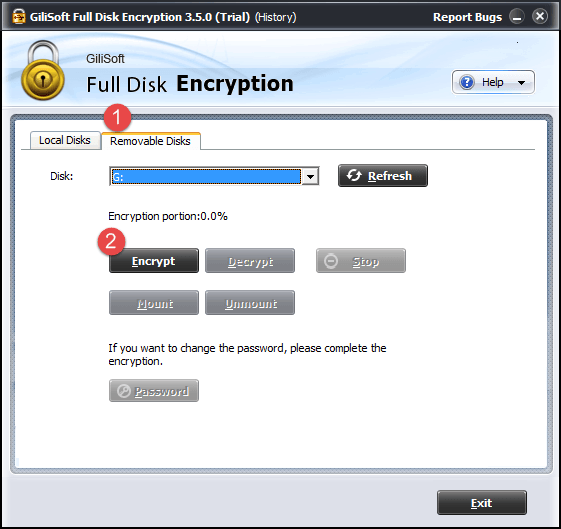
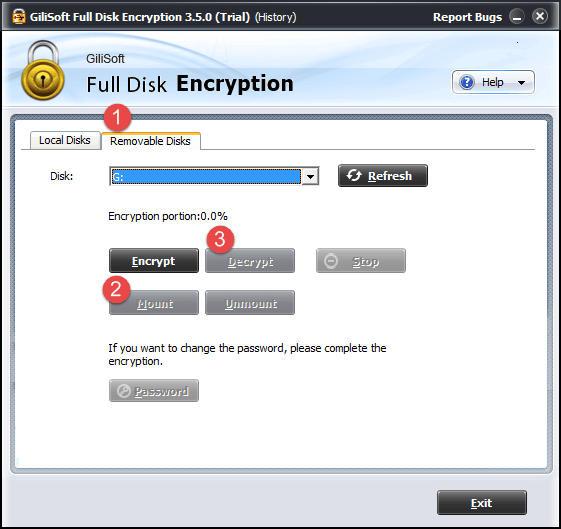
Insert the USB drive and choose it in the Removable Disks window after refreshing the device list.
Click Encrypt and set a password for the removable drive. Wait until the encryption percentage reaches 100%.
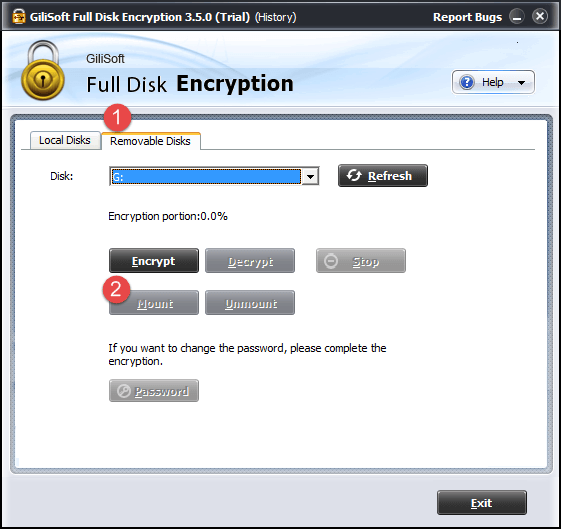
Refresh the list, click Mount, and enter the drive password. The protected storage then becomes available in Windows Explorer.
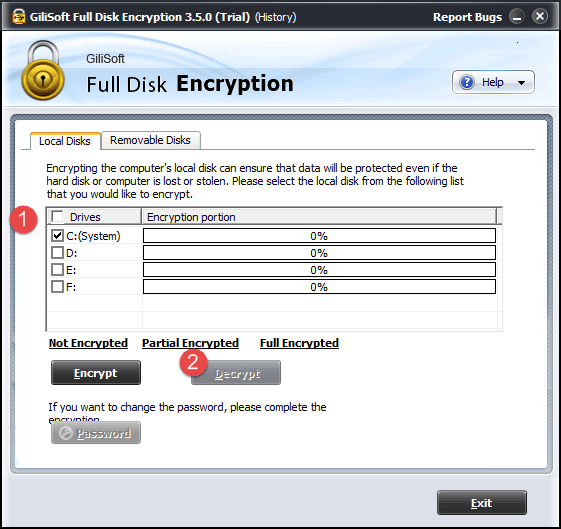
Select the encrypted drive, click Decrypt, and enter the correct password. Keep the computer powered until the operation completes.
Refresh and mount the USB drive first, then choose Decrypt from the removable-disk controls.
Local disks on one computer share a password. Wait until encryption reaches 100%, then use the enabled Password control in Local Disks to change it.
Use Advanced Settings to store an approved USB password, then protect Advanced Settings so other users cannot change the list.
Create a bootable Windows CD/DVD before encrypting the system partition. The recovery media can provide access to encrypted data if the computer cannot boot normally.
Obtain the LiveCD image from GiliSoft Support at support@gilisoft.com.
Write the image to a bootable disc and keep it in a safe place with the recovery password information.
Insert the encrypted USB drive, click Refresh in Removable Disks, choose Mount, and enter the correct password. The drive will then appear in Windows Explorer.
Refresh the removable-disk list, mount the drive with its password, and click Decrypt to remove the encryption from the USB disk.
After the USB drive is mounted and its encryption portion reaches 100%, use the Password control to change the drive password.
Open Advanced Settings to add the password to the remembered list. Protect Advanced Settings with its own password so other users cannot alter the list.
At startup, follow the password prompt. If no system drive was encrypted, press Enter as instructed; otherwise enter the disk password and press Enter to continue.
When the local disk encryption is complete, use the enabled Password control in the Local Disks window. The changed password also applies to the other Windows system in a multi-system environment.
Use GiliSoft Full Disk Encryption to password protect local and removable disks. Back up your files and prepare recovery media before encrypting the system partition.


Enter your email address to get our latest newsletter