
Screen Recorder for Async Updates on Mac
Reliable Mac recording depends on three things: the correct capture scope, the correct macOS permissions, and a short test that proves the screen and sound sources are present before an important session begins.
Quick answer
Record a focused update with context, evidence, decisions, blockers, and clear requests so viewers can respond without another meeting. Use GiliSoft Screen Recorder for Mac to keep the capture setup, audio and webcam sources, annotations, shortcuts, and long-session controls in one workspace.
Grant Only the macOS Permissions the Recording Needs
| Source | macOS setting | When it is needed |
|---|---|---|
| Screen and internal audio | Privacy & Security > Screen & System Audio Recording | Screen capture and supported Mac system sound |
| Microphone | Privacy & Security > Microphone | Narration, voice, or room audio |
| Camera | Privacy & Security > Camera | Presenter webcam or camera-only capture |
| Files and folders | Privacy & Security > Files & Folders | Saving into a protected Desktop, Documents, or other selected location |
After changing a permission, reopen the recorder when macOS requests it. Keep permissions disabled for sources the current recording does not use.
Structure the Message for Fast Review
| Decision | What to prepare | Quality check |
|---|---|---|
| Context | Why the update or recap matters | Confirm before opening sensitive content. |
| Evidence | Relevant screen, metric, decision, or result | Test the exact source and workflow. |
| Action | Owner, deadline, approval, or response needed | Make the important action easy to follow. |
| Archive | Title, date, written summary, and access scope | Verify the saved file in its real destination. |
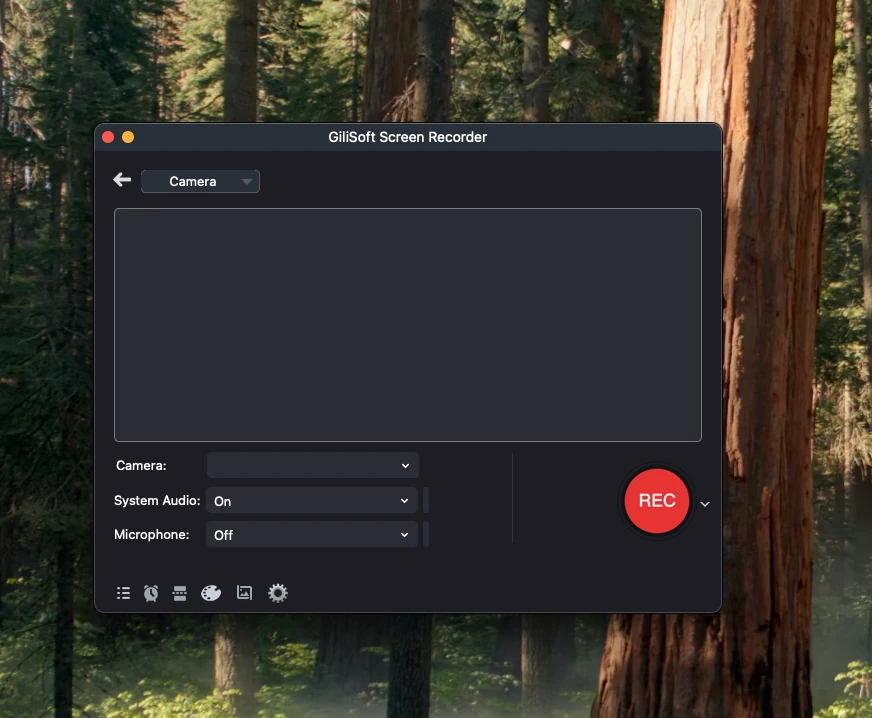
Record an async update with GiliSoft Screen Recorder for Mac
The screenshot below is a real Mac recorder interface matched to this workflow.
- Outline the message
Use context, evidence, decision, blocker, and next action.
- Open only supporting material
Avoid a tour of unrelated apps and tabs.
- Choose screen, webcam, or both
Use presenter video only when it adds communication value.
- Record a concise take
Pause between sections and state actions clearly.
- Review sharing permissions
Confirm the file and every visible item are suitable for the audience.
Control Longer Mac Recordings
- Confirm available storage
Choose the output folder and leave enough free space for the expected duration and quality.
- Use keyboard shortcuts
Start, pause, resume, stop, or take a snapshot without repeatedly opening the recorder window.
- Set an auto-stop rule
End capture by time or file size when a session has a known limit.
- Use automatic splitting
Divide long webinars, lessons, meetings, or training sessions into manageable files.
- Keep the Mac awake and powered
Prevent sleep and connect power before a session that cannot be repeated.
Verify the Saved Recording Before Sharing
- Open every output file
Check the first file and every automatically split segment.
- Inspect the picture
Confirm the correct display or region, readable text, cursor visibility, and webcam position.
- Listen to every required source
Check internal audio, microphone, clipping, echo, noise, and audio-video synchronization.
- Review privacy
Look for notifications, email, account names, files, browser tabs, chat, passwords, and private URLs.
- Test the destination
Play the exact uploaded or shared file on the platform the audience will use.
Record Only What You Are Authorized to Capture
Get the permission required by the meeting, school, employer, client, platform, and applicable local law before recording people, calls, classes, webinars, or private material. Recording requirements vary.
Turn on a Mac Focus such as Do Not Disturb, use demonstration data, and review the final video for names, messages, account identifiers, internal URLs, credentials, and unrelated desktop content.
Screen Recorder for Async Updates on Mac FAQ
Can GiliSoft Screen Recorder for Mac record an async update?
Yes. Choose the full screen or a custom area, then enable internal audio, microphone, webcam, cursor effects, annotation, or long-session controls as the task requires.
Why is the screen or system audio unavailable?
Open System Settings > Privacy & Security > Screen & System Audio Recording and allow the recorder. Reopen the app if macOS asks you to do so.
Why is the microphone or camera unavailable?
In System Settings > Privacy & Security, enable the recorder under Microphone or Camera. Close another app that may already be using the selected device.
How do I prevent private notifications from appearing?
Turn on a Focus such as Do Not Disturb, close private apps and tabs, and record a selected region instead of the full display when possible.
What should I check after recording?
Open the saved file and verify capture area, readable text, system sound, narration, webcam framing, synchronization, duration, privacy, and every auto-split segment.