

DVD to MOV Converter for Windows
MOV is useful when a Mac application, QuickTime-based workflow, or video editor specifically requests that container. The MOV extension alone does not guarantee compatibility because the player or editor must also support the video and audio codecs inside it.
Quick answer
Load the authorized DVD, ISO image, or VIDEO_TS folder; identify the correct title; select a MOV profile supported by the destination; choose the required audio and subtitle tracks; then test a short sample in the actual player or editor. Use MP4 instead when broad device and web compatibility is more important than a MOV-specific workflow.
MOV Is a Container, Not a Single Codec
A MOV file can contain different video and audio codecs. This is why one MOV file may work in an editor while another produces an import error, a black screen, or missing audio.
| Destination | What to confirm | Practical guidance |
|---|---|---|
| Mac playback | Codec support in the target macOS player | Test the actual file on the destination Mac before converting the complete DVD. |
| Video editor | Accepted MOV codecs, frame rates, and audio formats | Use the editor's documented import profile rather than choosing by extension alone. |
| Windows playback | Installed player and decoder support | Modern Windows players may open MOV, but codec support still varies. |
| Web, phone, or TV | Whether MOV is actually required | MP4 is normally the first format to test for broad delivery compatibility. |
Choose MOV or MP4 for the Real Workflow
| Requirement | Choose MOV when | Choose MP4 when |
|---|---|---|
| Editing | The editor specifically requests a supported MOV profile. | The editor supports MP4 and no MOV-specific feature is required. |
| Playback | The destination application or Apple workflow is tested with MOV. | The file must play across current computers, phones, TVs, and browsers. |
| File size | Editing compatibility matters more than minimum storage. | Efficient delivery and easier sharing are priorities. |
| Legacy requirement | An existing project, archive, or system expects MOV. | No fixed container requirement exists. |
Choose MOV Settings for DVD Video
| Setting | Recommended approach | Common problem |
|---|---|---|
| Video codec | Choose an available MOV profile supported by the target editor or player. | The MOV opens but displays no picture when the codec is unsupported. |
| Resolution | Keep DVD source dimensions or use a tested editing preset. | Upscaling creates a larger file without restoring source detail. |
| Aspect ratio | Preserve the intended 16:9 or 4:3 display geometry. | Incorrect interpretation stretches or squeezes the image. |
| Frame rate | Keep source timing unless the destination requires a specific rate. | Unnecessary conversion can introduce judder or sync drift. |
| Bitrate | Balance visible quality with storage and editing performance. | Excessive bitrate creates large files without adding DVD detail. |
| Audio | Select the intended language and a codec supported by the destination. | An unsupported stream can create a MOV file with no sound. |
| Subtitles | Choose the required DVD subtitle track and verify output behavior. | The default track may be wrong or may not appear after export. |
How to Convert a DVD to MOV with GiliSoft
- Load the authorized DVD source
Open GiliSoft Home DVD Converter and load the readable disc, ISO image, or complete VIDEO_TS folder.
- Select the correct title
Compare durations and preview likely titles instead of assuming the longest entry is always correct.
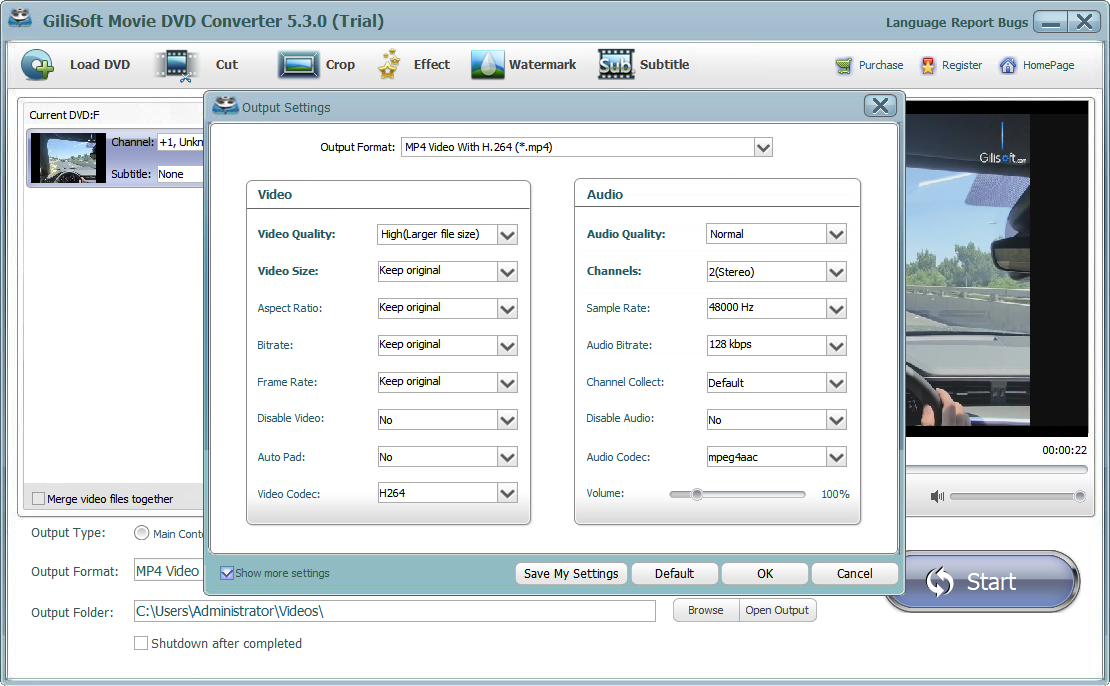
- Choose a MOV output profile
Select MOV and use a profile supported by the receiving Mac, Windows player, or editing application.
- Set picture, audio, and subtitle options
Confirm codec, resolution, aspect ratio, frame rate, bitrate, audio language, and subtitles.
- Convert a representative sample
Test motion, dialogue, music, subtitles, seeking, and editor import before processing the full title.
- Convert and verify the complete title
Inspect the beginning, middle, and end, and test the MOV file in its intended destination.

Prepare MOV Files for Video Editing
Editing software can be more selective than a media player. A MOV file that plays correctly may still be slow to seek or unsupported in a particular editor.
- Check the editor's documented MOV codec and frame-rate requirements.
- Keep the DVD frame rate unless the project specification requires conversion.
- Preserve 16:9 or 4:3 display geometry to prevent distorted footage.
- Choose a less compressed profile only when available, supported, and storage permits.
- Import a short sample into the real project before converting every DVD title.
Troubleshoot DVD to MOV Conversion
| Problem | Likely cause | What to try |
|---|---|---|
| MOV will not open | The destination does not support the codec inside the container. | Choose a MOV profile listed by the player or editor and test again. |
| Video has no sound | Wrong DVD track or unsupported audio codec. | Select the intended audio language and use a compatible audio setting. |
| Editor import fails | The editor supports MOV but not the selected codec, frame rate, or audio stream. | Match the editor's documented import specification. |
| Picture is stretched | The DVD display aspect ratio was interpreted incorrectly. | Preserve the intended 16:9 or 4:3 geometry and retest. |
| File is too large | Bitrate or editing profile exceeds the actual requirement. | Reduce bitrate carefully or choose MP4 for delivery instead of editing. |
| Audio drifts out of sync | Frame-rate conversion or irregular source timing. | Keep the source frame rate and test another supported MOV profile. |
DVD to MOV Converter FAQ
Is MOV a video codec?
No. MOV is a container that can hold different video and audio codecs. Compatibility depends on the streams inside the file and the receiving player or editor.
Should I convert DVD to MOV or MP4?
Choose MOV when an Apple or editing workflow specifically requests it. Choose MP4 for broad playback, web delivery, phones, TVs, and smaller modern files.
Can a MOV file created on Windows open on a Mac?
Usually yes when the MOV file uses video and audio codecs supported by the Mac application. Test a sample in the actual destination before converting the full title.
Why will the MOV file not open in my editor?
The editor may support the MOV container but not the codec inside it. Choose a MOV profile listed by the editor and verify frame rate, audio, and resolution requirements.
Can I convert a DVD ISO or VIDEO_TS folder to MOV?
Yes. GiliSoft Home DVD Converter can load supported physical DVDs, ISO images, and VIDEO_TS folders for authorized conversion.
Why does the MOV file look stretched?
The DVD display aspect ratio may have been interpreted incorrectly. Preserve the intended 16:9 or 4:3 geometry and test the output in the target application.