
GiliSoft Any Video Encryptor User Guide

How to Password Protect Videos and Media Files on Windows

Follow the complete process for adding files, choosing GFX or EXE output, setting a playback password, opening protected content, and binding an EXE package to an authorized USB drive.

  • Create password-protected GFX or EXE packages
  • Prevent screenshots and Save As during protected playback
  • Bind EXE packages to an authorized USB drive
Home > How to Use > Any Video Encryptor

Choose the task you need

Step-by-step Any Video Encryptor guide

1. Check the supported files and output workflow

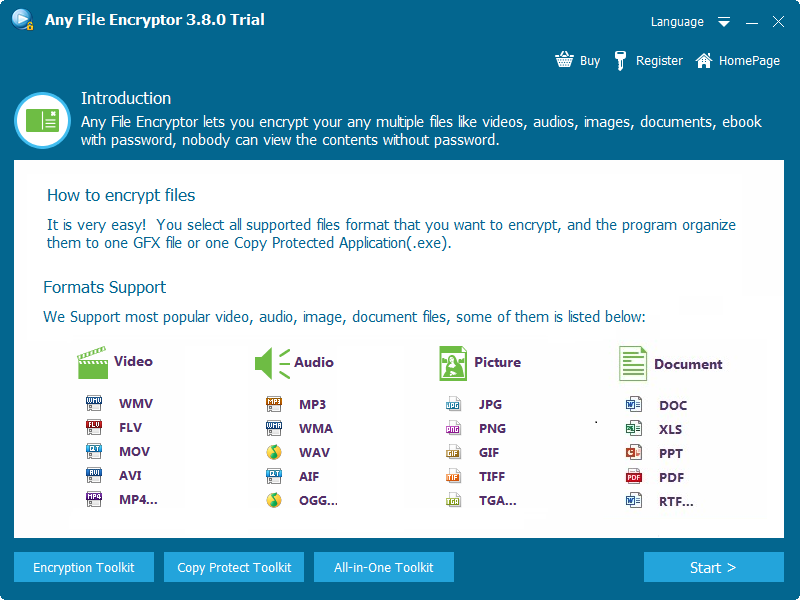
The welcome screen summarizes the media and document types that can be placed inside a protected package.

1Open GiliSoft Any Video Encryptor.
2Confirm that the source files belong to a supported video, audio, image, document, or ebook category.
3Click Start to begin creating the encrypted package.
2. Add the files you want to encrypt

Add a single video or combine several related files in one protected delivery package.

1Click Add File(s) and select the source files.
2Review the name, size, duration, and resolution shown in the file list.
3Use Remove File(s) or Clear File(s) if the list needs correction.
4Click Next when the package contains the right files.

3. Choose GFX or EXE output and set the password

This is the main delivery decision. GFX is the encrypted media format used with the protected player; EXE creates a self-running Windows package.

1Select GFX File or EXE File under Output Format.
2Enable Password Protection, enter the password, and confirm it.
3Choose a local folder, external drive, or USB destination.
4Continue to create the protected output package.
For controlled USB delivery, EXE output can be bound to the selected USB drive so the package does not open normally after being copied away. The EXE option shown by the program has a 4 GB package limit.

4. Open and play the encrypted file

GFX packages open through the protected player rather than exposing the original source video as an ordinary media file.

1Open the protected player and click Open Files.
2Select the encrypted GFX package.
3Enter the correct password when prompted.
4Play the approved content, then close the player when viewing is finished.
Controlled viewing can prevent casual screenshots and ordinary Save As export while protected content is open.

GFX or EXE: which output should you choose?

DecisionGFX encrypted fileProtected EXE package
How it opensOpens through the protected GFX player.Runs as a self-contained package on Windows.
Best useEncrypted media libraries and repeat protected playback.Portable delivery when a separate player is less convenient.
PasswordSupports password-protected opening.Supports password-protected opening.
USB deliveryCan be stored and opened from removable media.Can be bound to the selected USB drive for device-tied delivery.
Package sizeUse for regular encrypted media packaging.The interface identifies a 4 GB limit for EXE output.

Protected playback and USB delivery

Reduce screenshots and ordinary file saving

Protected viewing keeps recipients inside the controlled player and can block casual screenshot capture and normal Save As export of the protected content.

Keep a protected EXE tied to its USB drive

Use USB-bound EXE output when the package should open from the selected removable drive and stop working normally after it is copied elsewhere.

Any Video Encryptor FAQ

What is the difference between GFX and EXE?

GFX is an encrypted media package opened through the protected player. EXE is a self-running Windows package intended for portable delivery.

Can I encrypt several files together?

Yes. Add multiple supported files to the list and package them as one protected delivery.

Does the recipient need the original source video?

No. Send the protected output package rather than the ordinary source files.

Can an EXE package be tied to a USB drive?

Yes. USB-bound EXE delivery keeps the protected package associated with the selected removable drive.

Can protected viewing block screenshots and Save As?

Controlled viewing can restrict casual screenshot capture and ordinary Save As export while the encrypted content is open.

What happens if the password is forgotten?

Keep the password in a secure place. A protected package cannot be opened normally without the correct password.

More video encryption guides

Encrypt videos before local or USB delivery

Create a password-protected GFX or EXE package instead of sending ordinary open media files.

View Any Video Encryptor