
Close documents, projects, games, installers, and other applications that could be using files or runtime components.
GiliSoft Total Repair Help Center
Total Repair User Guide for Windows
Follow the complete workflow to clean storage, diagnose Windows and application errors, manage startup items, and handle damaged or lost files.

Before you clean or repair Windows
Close important work, keep the PC connected to power, and review scan results before removing files or changing Windows settings.
Maintain a separate copy of irreplaceable documents and media before system maintenance or damaged-file repair.
Decide whether the task is storage cleanup, a program that will not open, slow startup, or a damaged file.
Check detected items, paths, sizes, and repair categories instead of accepting every result without review.
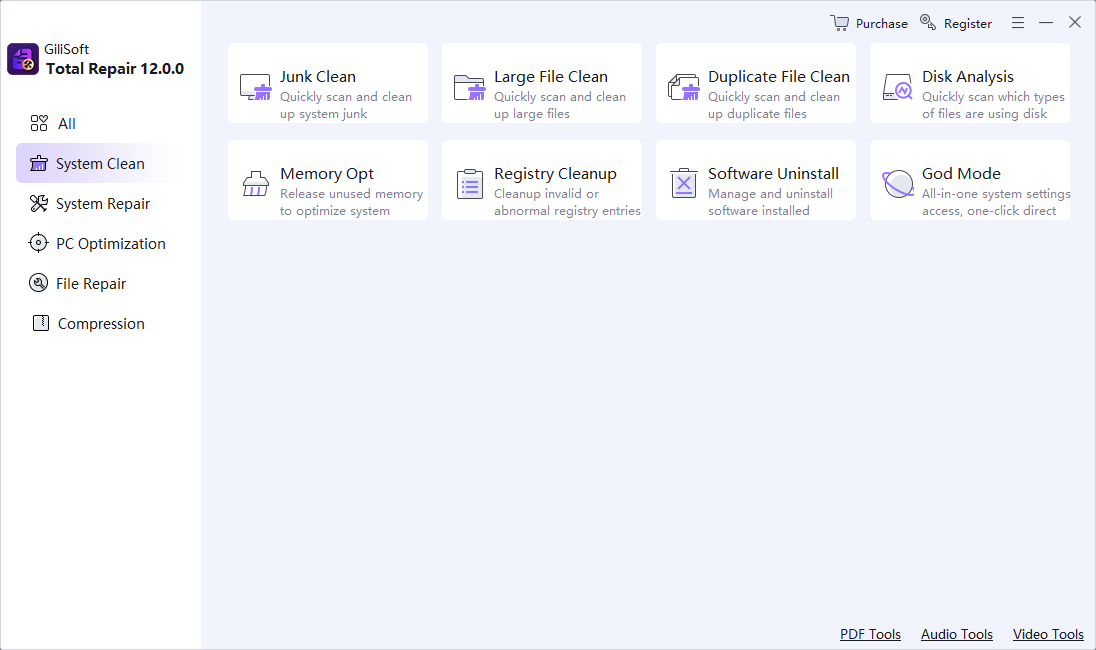 Choose System Clean, System Repair, PC Optimization, or File Tools for the task
1. Clean junk files and review storage usage
Scan first, then select what should be removed
- Open System Clean.
- Choose Junk Clean to scan Windows junk, browser traces, and software leftovers.
- Review the detected categories and file sizes.
- Select only the items you want to remove.
- Run cleanup and confirm that the expected disk space was released.
Use Large File Clean, Duplicate File Clean, and Disk Analysis when the main problem is unclear storage use rather than temporary junk.
 Review junk categories and scan results before cleanup
Find large files
Sort oversized files by location and size before deciding whether they should be moved, archived, or deleted.
Review duplicate groups
Compare repeated files and keep the copy that belongs in the correct project, library, or backup location.
Analyze disk usage
See which file types and folders consume storage before removing data from a crowded drive.
Remove unwanted software
Use Software Uninstall for programs you no longer need instead of deleting their folders manually.
2. Diagnose application and Windows errors
Start broad or open the repair category that matches the failure
- Open System Repair.
- Use One-Click Repair when several Windows problems appear at the same time.
- Use Application Error when a desktop program will not start or repeatedly fails.
- Use System Error or System DLL Scan for Windows component problems.
- Review detected results before starting repair.
- Restart Windows when the selected repair asks for it, then test the affected program again.
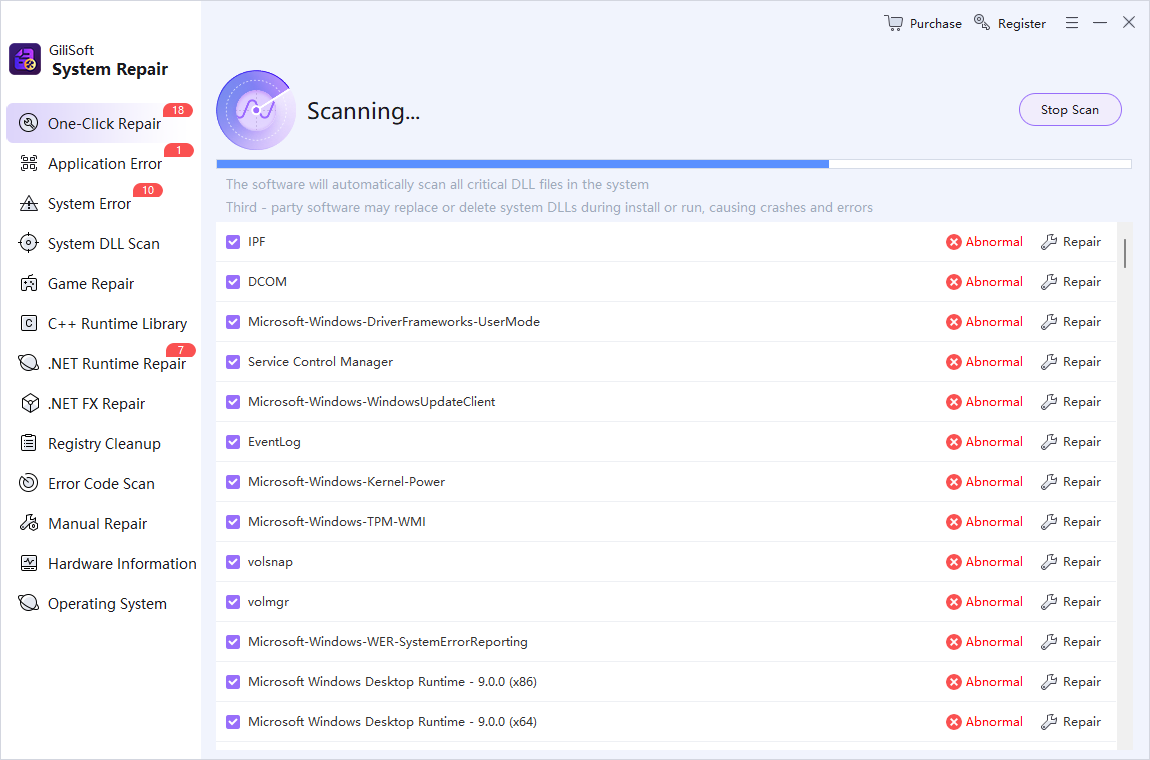 Scan critical Windows components and review detected problems
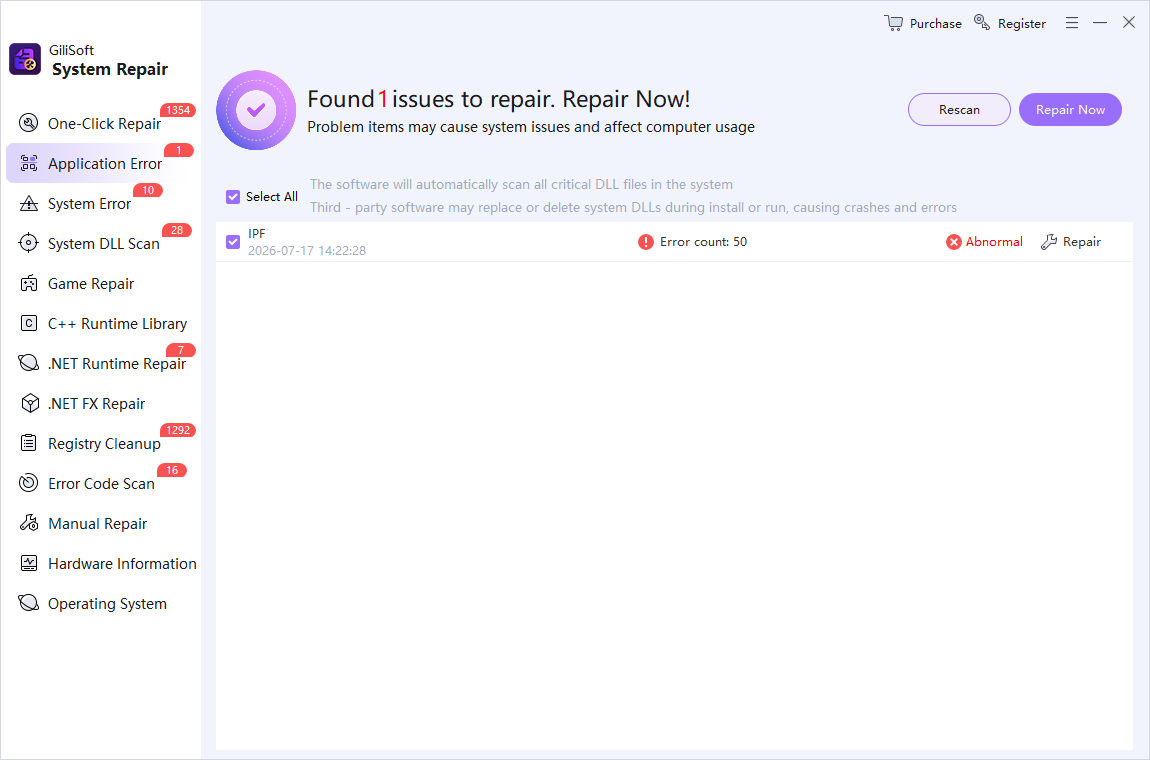 Check components that can prevent applications from opening
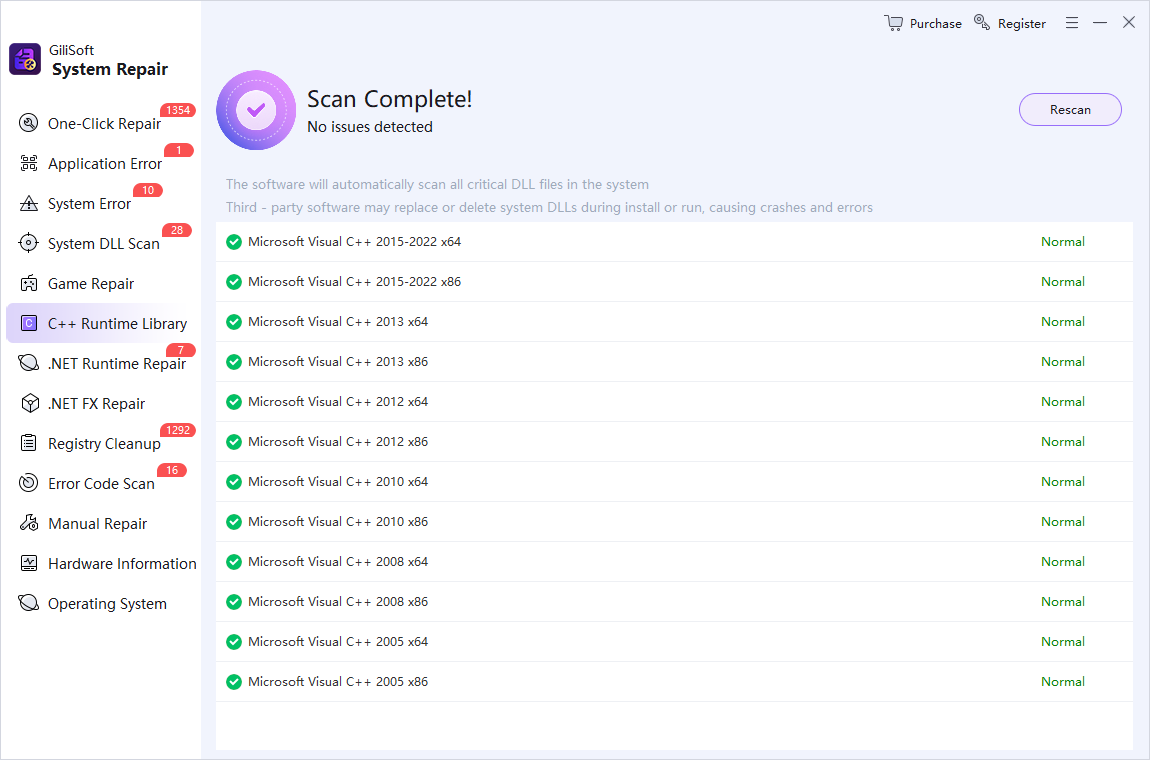 Review Microsoft Visual C++ runtime components used by programs and games
DLL and system components
Use System DLL Scan when missing or abnormal Windows DLL components are related to the failure.
Visual C++ runtime
Check installed Microsoft Visual C++ runtime libraries when an application reports a runtime dependency error.
.NET Runtime and Framework
Use the matching .NET repair category when a program depends on damaged or incomplete .NET components.
Game repair
Check common game startup libraries and related components when a Windows game will not launch normally.
3. Repair a known DLL, runtime, or error-code problem
Use a specific repair path when the error is already identified
- Record the exact DLL name, runtime message, or Windows error code.
- Open Manual Repair or Error Code Scan.
- Enter or select the known problem.
- Review the proposed repair information.
- Apply the matching repair and restart if required.
- Repeat the action that originally produced the error.
Avoid replacing DLL files from unknown download sites. Use the repair category that matches the Windows component or installed runtime.
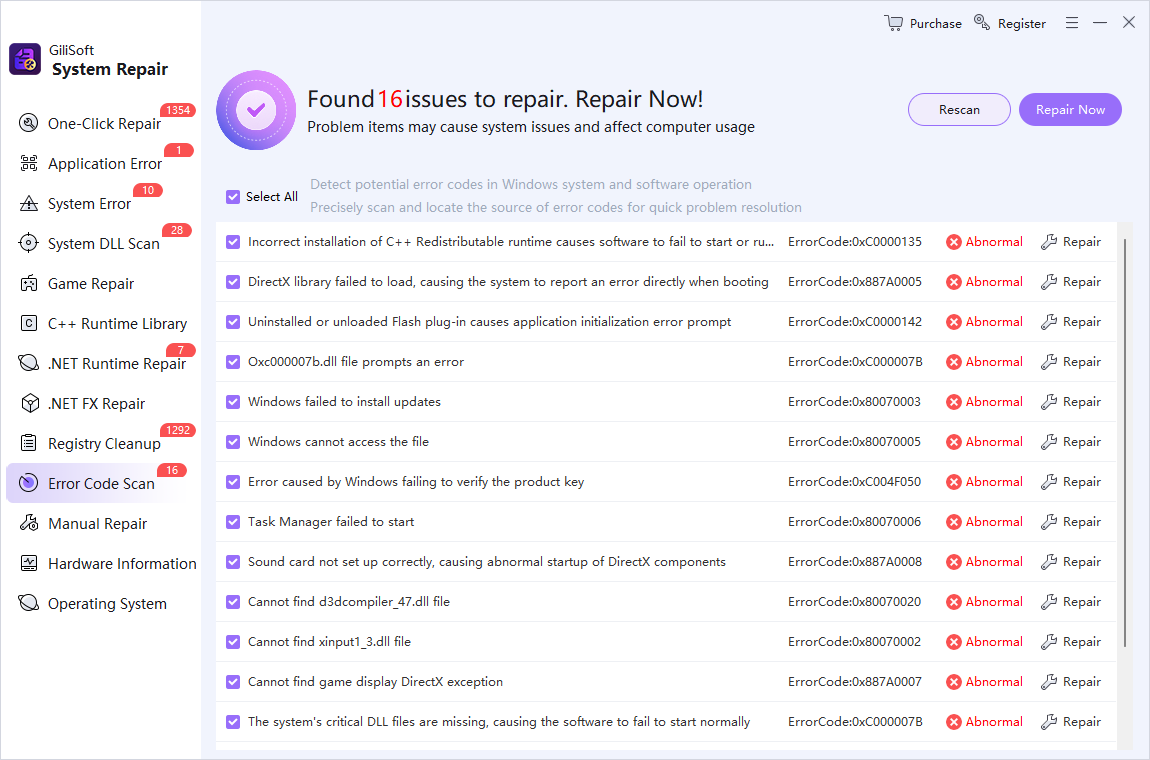 Connect a known Windows or software error code with the available repair action
4. Manage startup programs, registry entries, and Windows settings
Review entries that affect startup and daily PC use
- Open PC Optimization.
- Use Startup Manager to review startup programs, scheduled tasks, and services.
- Disable only entries you recognize and do not need at startup.
- Use Registry Cleanup to scan invalid or abnormal entries, then review the results.
- Use Context Menu to remove unwanted right-click menu entries.
- Check Hardware Information and Operating System details before deeper maintenance.
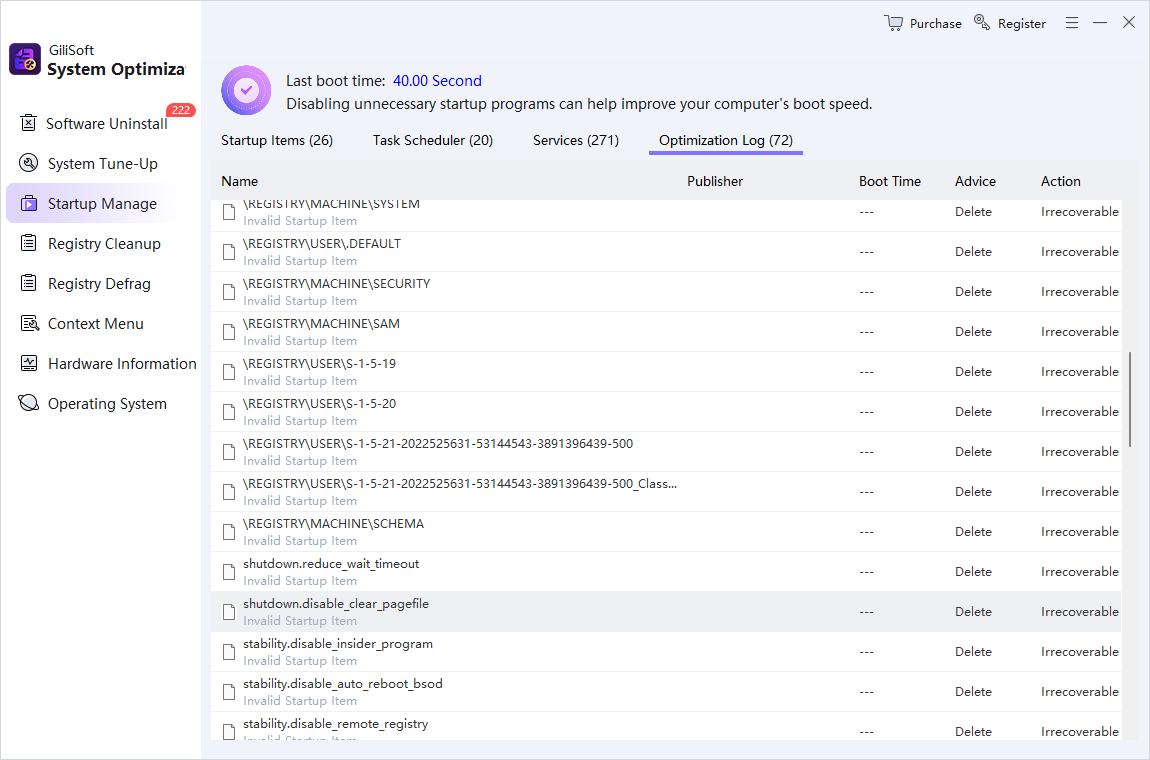 Review startup programs, scheduled tasks, and services
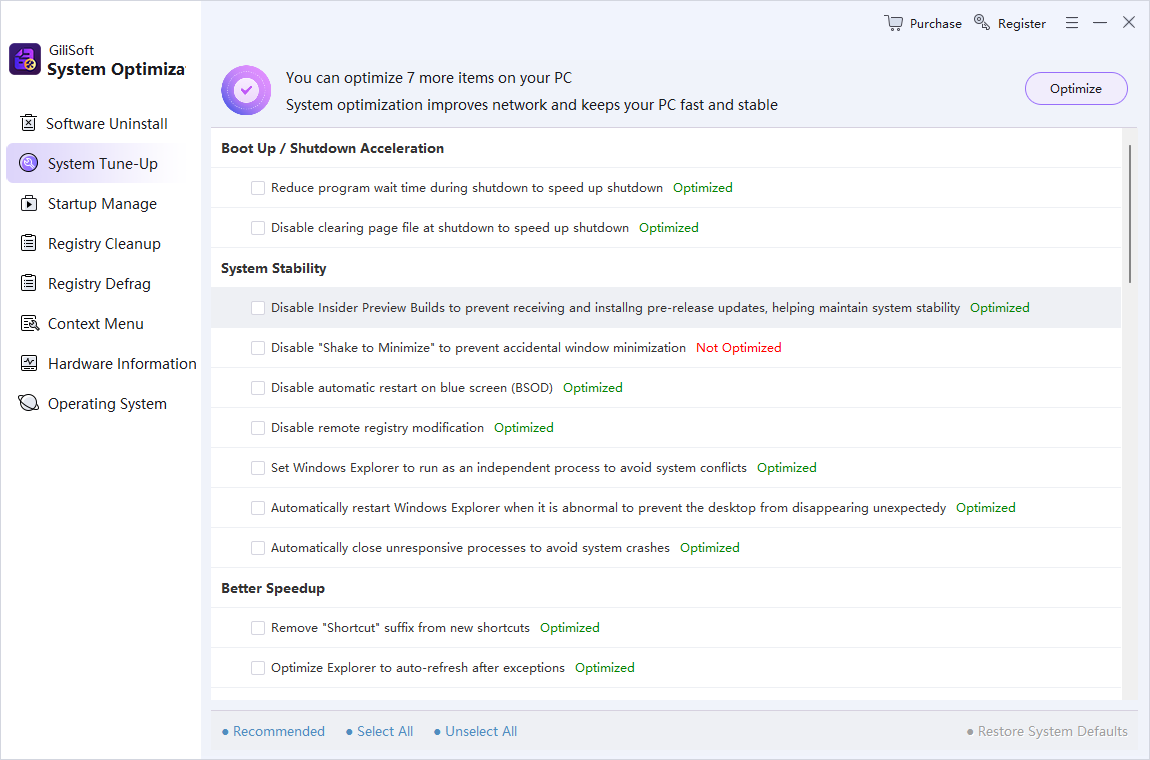 Review Windows stability, Explorer, startup, and shutdown settings
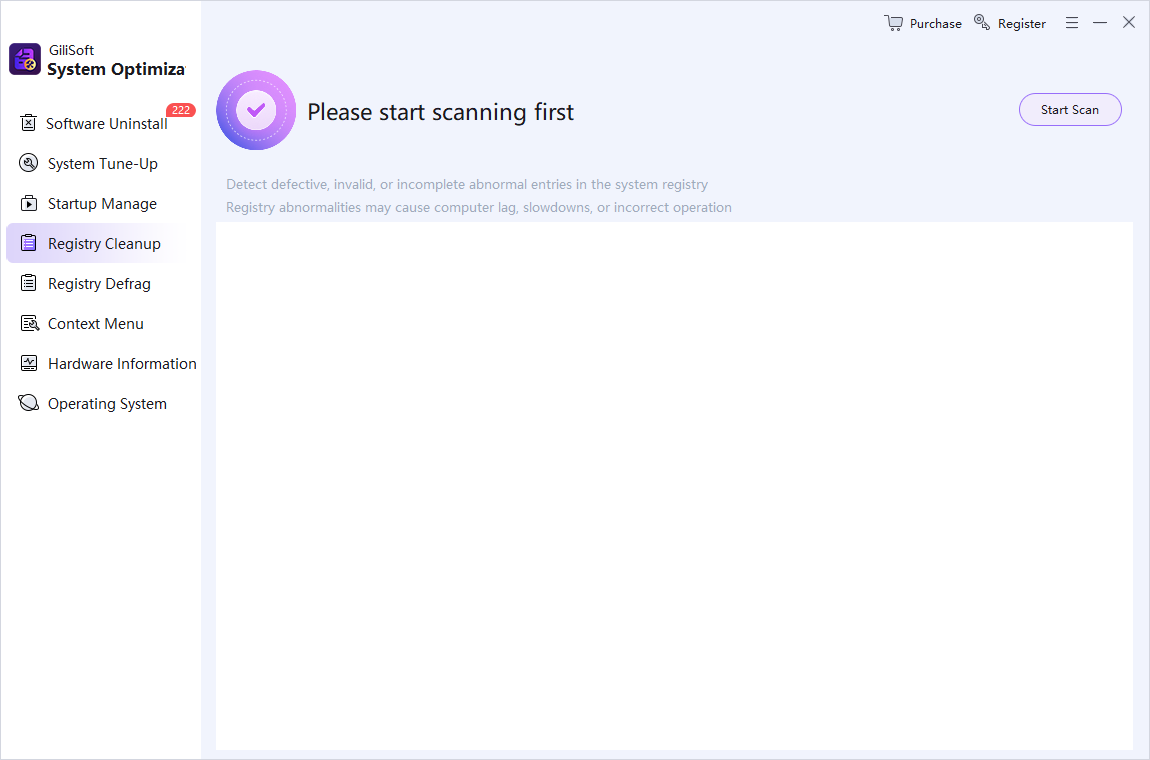 Inspect registry scan results before cleanup
5. Repair damaged files, recover lost data, or compress files
Use File Tools after identifying whether the problem is file corruption, deletion, or storage and delivery size.
Choose the tool that matches the file problem
- Open File Tools.
- Choose Video Repair, Image Repair, Document Repair, or Audio Repair for a damaged file.
- Add a copy of the damaged file and select a separate output location.
- Use Data Recovery when files were deleted or lost rather than corrupted.
- Use Compression to reduce file, folder, or image size, or to decompress a supported archive.
- Open the result and verify it before replacing an original file.
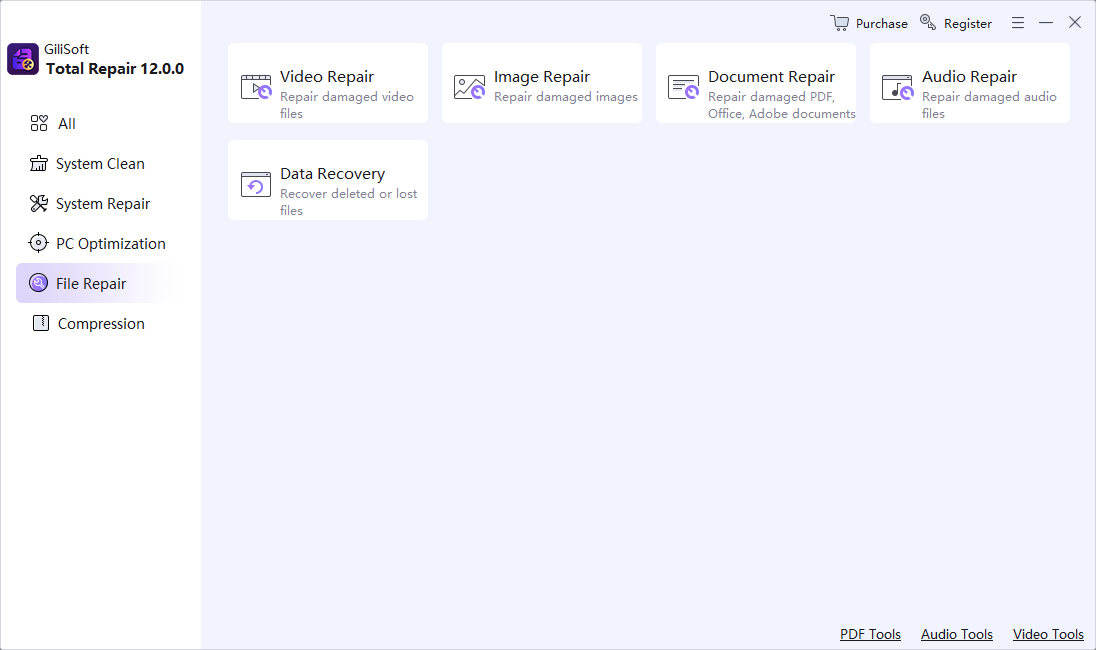 Choose video, image, document, audio repair, or data recovery
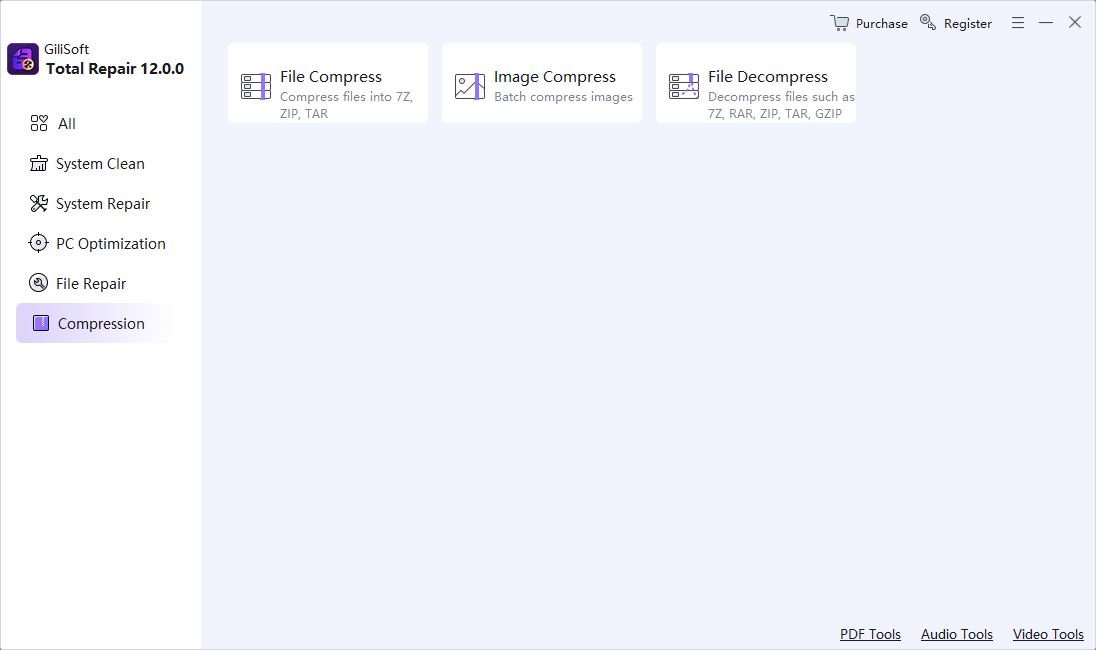 Compress files, folders, and images or decompress supported archives
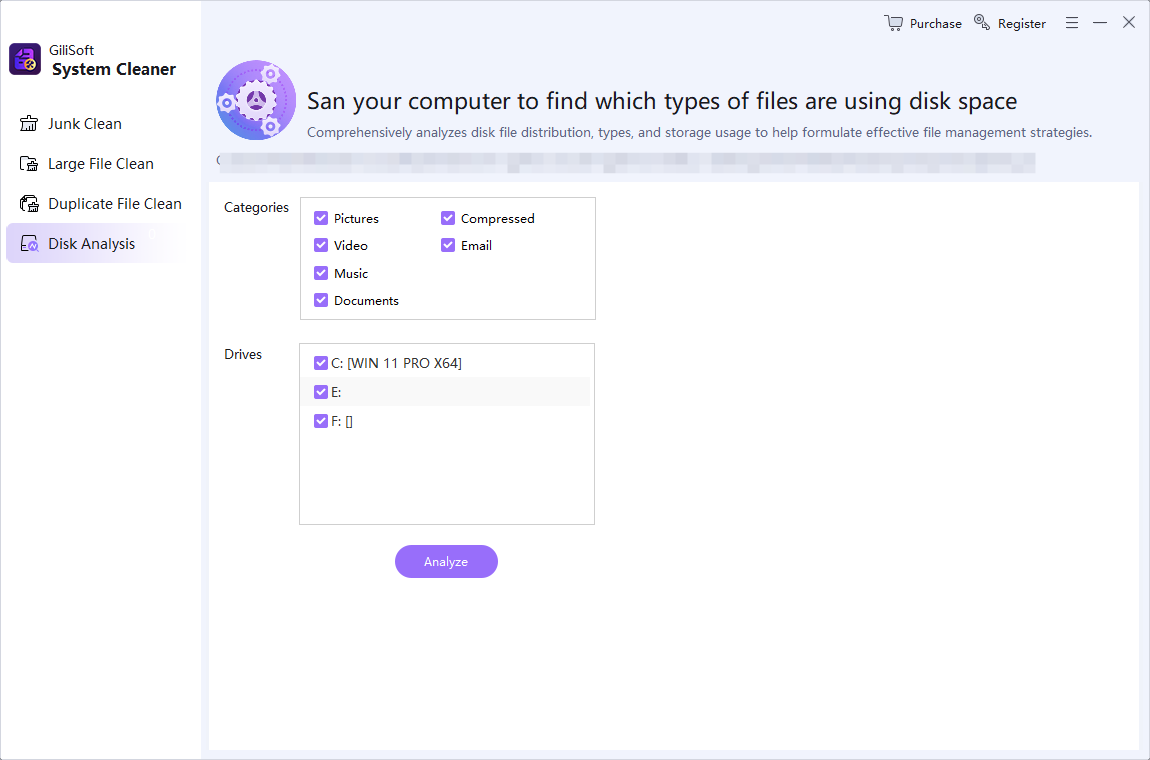 Review disk use before archiving or compressing large data
Final Windows maintenance checklist
Run these cleanup and repair tasks with GiliSoft Total Repair
Download TrialScan first, review the detected items, and apply only the cleanup, repair, startup, or file action that matches the problem.
Total Repair troubleshooting and FAQ
Should I clean every detected item?
No. Review categories, paths, and file sizes first. Keep files or entries you recognize as necessary for current programs and projects.
Which repair should I run first?
Use One-Click Repair when the cause is unknown. Open Application Error, DLL, Visual C++, .NET, Game Repair, or Error Code Scan when the failure is already identified.
Why does a program still fail after repair?
Restart Windows, confirm that the correct repair category was used, and check whether the application itself needs to be repaired or reinstalled.
Can Total Repair remove startup programs?
Startup Manager can review startup programs, scheduled tasks, and services. Change only entries you recognize and test Windows after the adjustment.
When should I use file repair instead of data recovery?
Use file repair when the file exists but will not open or plays incorrectly. Use data recovery when the file was deleted, lost, or is no longer visible.
Can I inspect the PC before changing settings?
Yes. Disk Analysis, Hardware Information, Operating System details, scan results, and status screens help you review the PC before acting.
Clean storage, repair Windows errors, and manage startup
Use GiliSoft Total Repair to review Windows cleanup and repair results, fix matching system components, and handle damaged or lost files.


