GiliSoft File Lock Pro Help Center

File Lock Pro user guide for Windows

Choose a task and follow the matching screenshot and steps. Learn how to lock folders, hide files and drives, prevent unwanted changes, protect external storage, encrypt files, shred sensitive data, monitor folders, and manage recovery settings.

Folder lockFile hideDrive protectionFile encryptionSecure delete
Home > How-tos > File Lock Pro > User Guide

Choose the File Lock Pro task you need

Choose the operation you need and follow the written steps. These guides are designed for users who want a quick answer while also connecting related File Lock Pro help pages.

Lock files and folders

Password protect local files, folders, and drives.

View guide
Hide files and drives

Make private files, folders, or local drives invisible.

View guide
Protect from changes

Deny write, delete, or rename actions for selected data.

View guide
External and shared folders

Lock files on USB, external disks, and shared folders.

View guide
Encrypt files

Create password-protected encrypted files or EXE output.

View guide
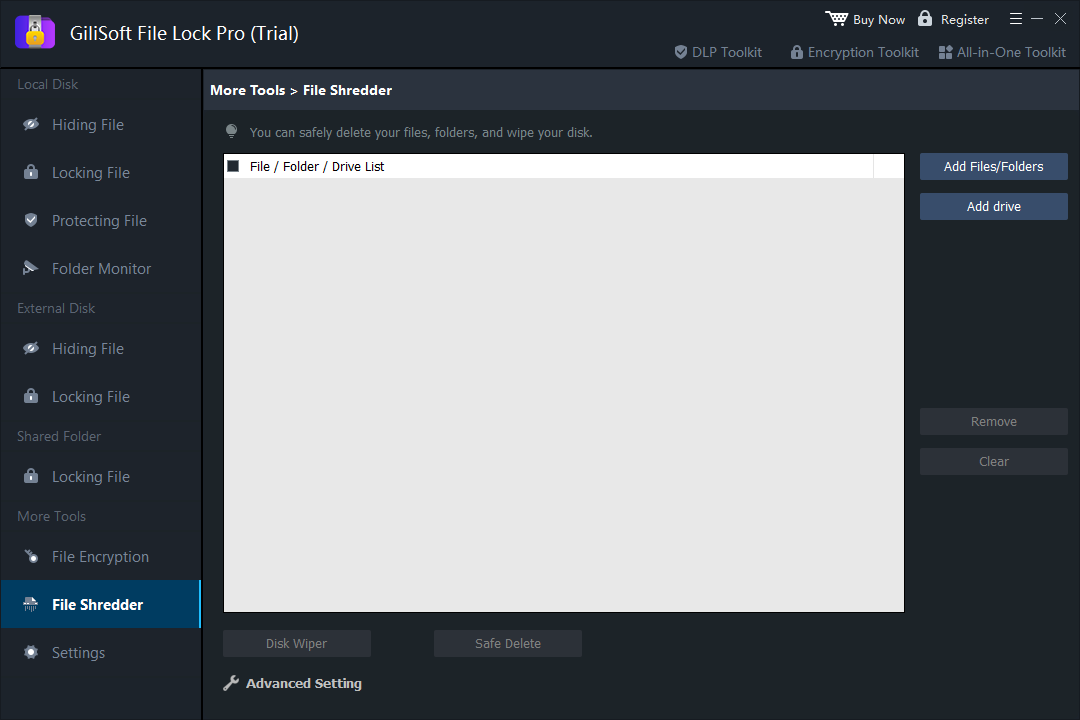
Shred files

Permanently delete sensitive files and folders.

View guide
Folder monitor

Track file and folder changes for review.

View guide
Password and stealth settings

Change password, set recovery email, and use stealth mode.

View guide

Choose Lock, Hide, or Protect

These three operations solve different problems. Choose the result you want before adding files or folders.

Lock

Keeps the item visible in Windows, but requires the File Lock Pro password before it can be opened.

Hide

Removes files, folders, or supported local drives from ordinary browsing and Windows search.

Protect

Keeps content readable while helping block unwanted editing, deletion, renaming, moving, or writing.

Set recovery emailAdd a recovery email before changing passwords or enabling stealth options.
Start with test dataConfirm the selected rule on a non-critical file or folder first.
Keep a backupBack up important data before encryption, drive operations, or permanent deletion.
Verify the resultTest the protected item from Windows Explorer after applying each rule.

File Lock Pro step-by-step guides

Each tutorial pairs the relevant File Lock Pro interface with the exact workflow. Select any screenshot to view it at full size.

How to lock files and folders with a password

Use Lock when the file, folder, or local drive should remain visible but must not open without the File Lock Pro password.

  1. Open File Lock Pro and enter the master password.
  2. Choose Local Disk, then select Locking File.
  3. Click Lock Files/Folders and add the target item.
  4. Select the item and apply Set to lock.
  5. Test access from Windows Explorer.

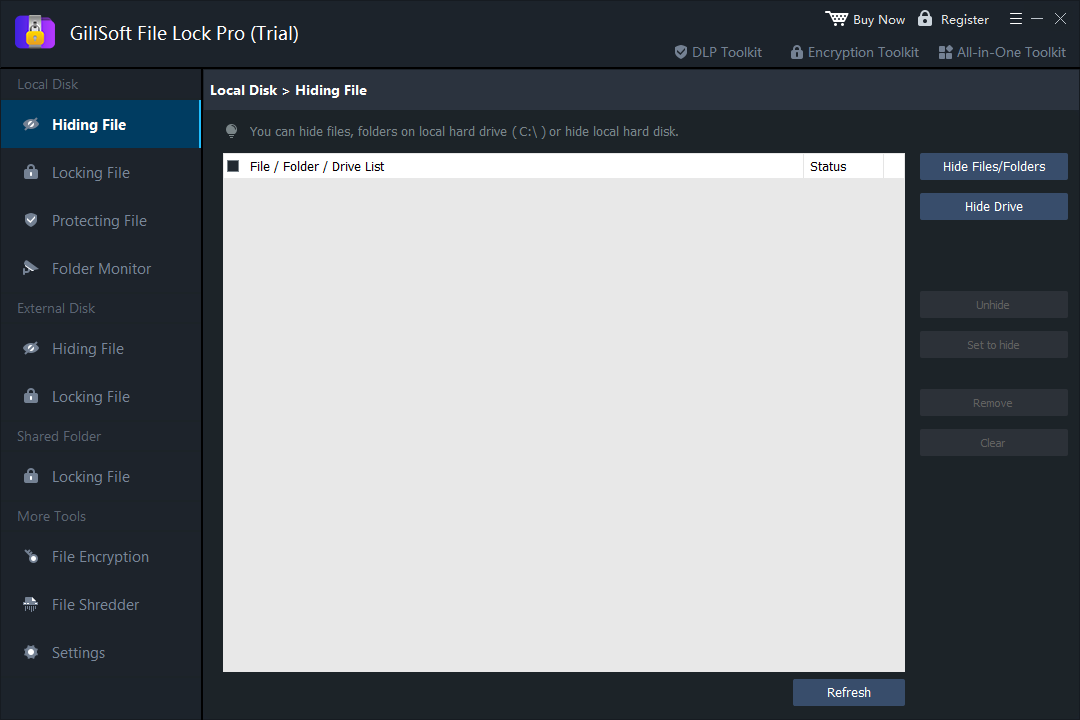
How to hide files, folders, and a local drive

Use Hide when private data should not appear during ordinary browsing, Windows search, or casual folder checking.

Hide files folders and local drives with File Lock ProLocal Disk > Hiding File includes separate controls for files, folders, and local drives.
  1. Choose Local Disk > Hiding File.
  2. Click Hide Files/Folders or Hide Drive.
  3. Select the target and confirm it appears in the list.
  4. Apply the hide rule to the selected item.
  5. Check Windows Explorer and Windows search to verify the result.

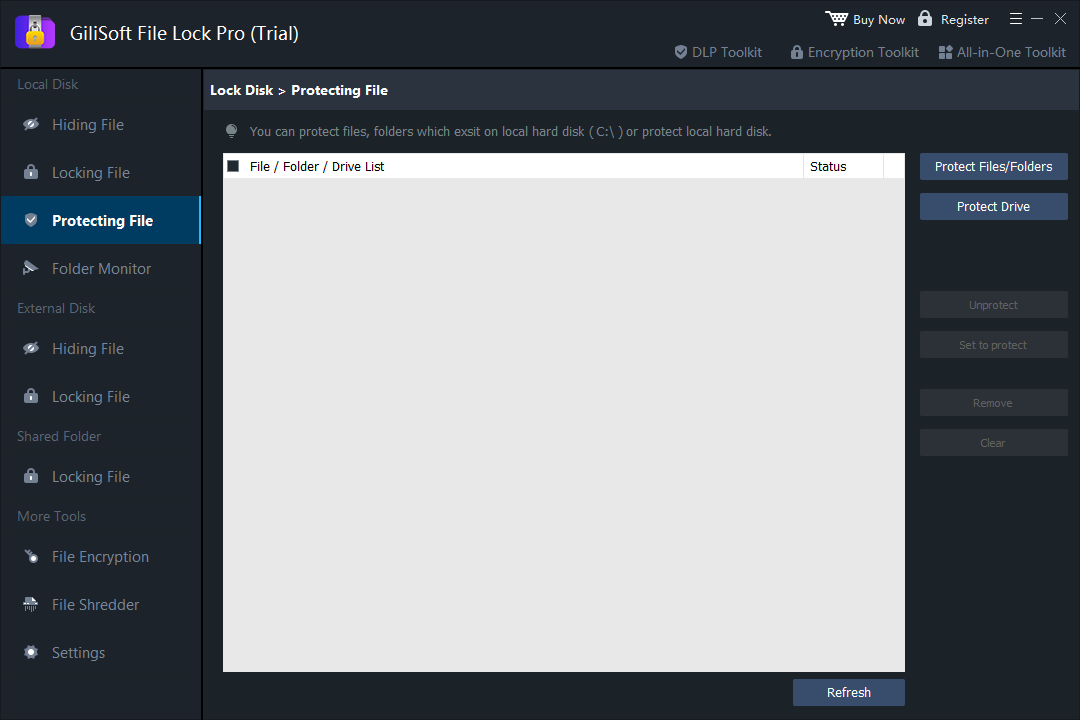
How to prevent editing, deleting, or renaming

Use Protect when content should stay accessible for reading while unwanted file changes are blocked.

Protect files folders and drives from changes with File Lock ProProtecting File applies restrictions to selected files, folders, or supported local drives.
  1. Choose Local Disk > Protecting File.
  2. Click Protect Files/Folders or Protect Drive.
  3. Add the target item and select it in the list.
  4. Apply Set to protect.
  5. Test rename, edit, move, or delete behavior using a non-critical item.

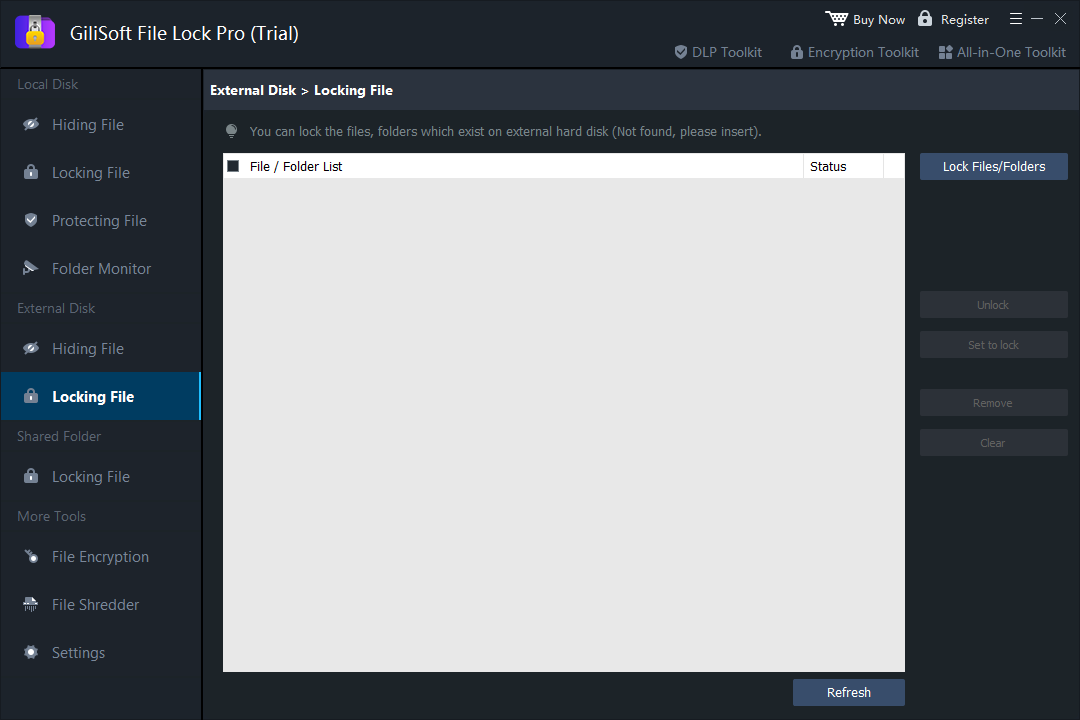
How to lock files on external drives and shared folders

Use the External Disk and Shared Folder areas when protected content is stored outside the local Windows folders.

Lock files and folders on an external driveExternal Disk > Locking File manages password-based access for removable storage content.
  1. Connect the USB or external drive, or make sure the shared folder is reachable.
  2. Choose External Disk or Shared Folder.
  3. Open Locking File; use Hiding File instead when visibility is the concern.
  4. Add the target files or folders and apply the rule.
  5. Reconnect or reopen the location and test access.

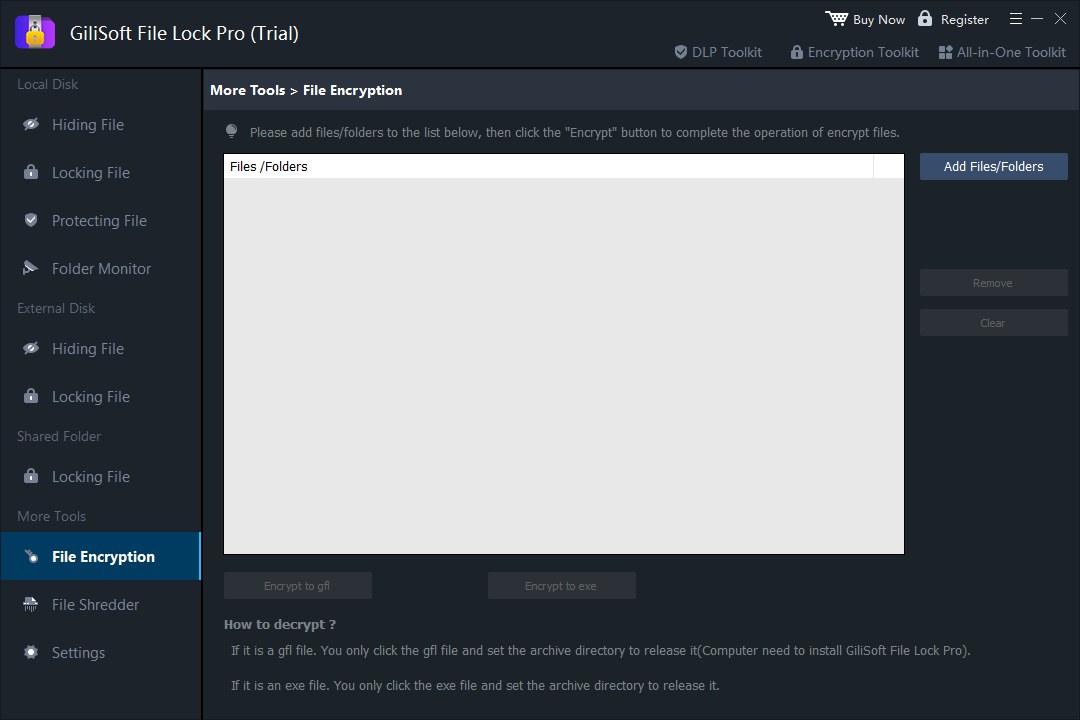
How to create an encrypted GFL or EXE file

File Encryption creates a separate password-protected output for storage or transfer. Choose the output type that matches how the recipient will open it.

Create encrypted GFL or EXE output with File Lock ProFile Encryption offers Encrypt to GFL and Encrypt to EXE output choices.
  1. Choose More Tools > File Encryption.
  2. Click Add Files/Folders and select the source content.
  3. Choose Encrypt to GFL for File Lock Pro encrypted output or Encrypt to EXE for executable output.
  4. Set and confirm the encryption password.
  5. Save the output, open it, and verify the password before sharing or removing the source.
Keep an independent backup of important source files until the encrypted output has been tested.

How to monitor folder changes

Folder Monitor records activity for directories you select and provides controls to refresh, export, or clear the event list.

Monitor selected folder changes in File Lock ProAdd monitored directories and review time-and-event records in the lower log panel.
  1. Choose Local Disk > Folder Monitor.
  2. Click Add and select the directory.
  3. Use the advanced settings when the monitoring rule needs adjustment.
  4. Click Refresh to review time and event records.
  5. Export the log when a copy is needed, or clear records after review.

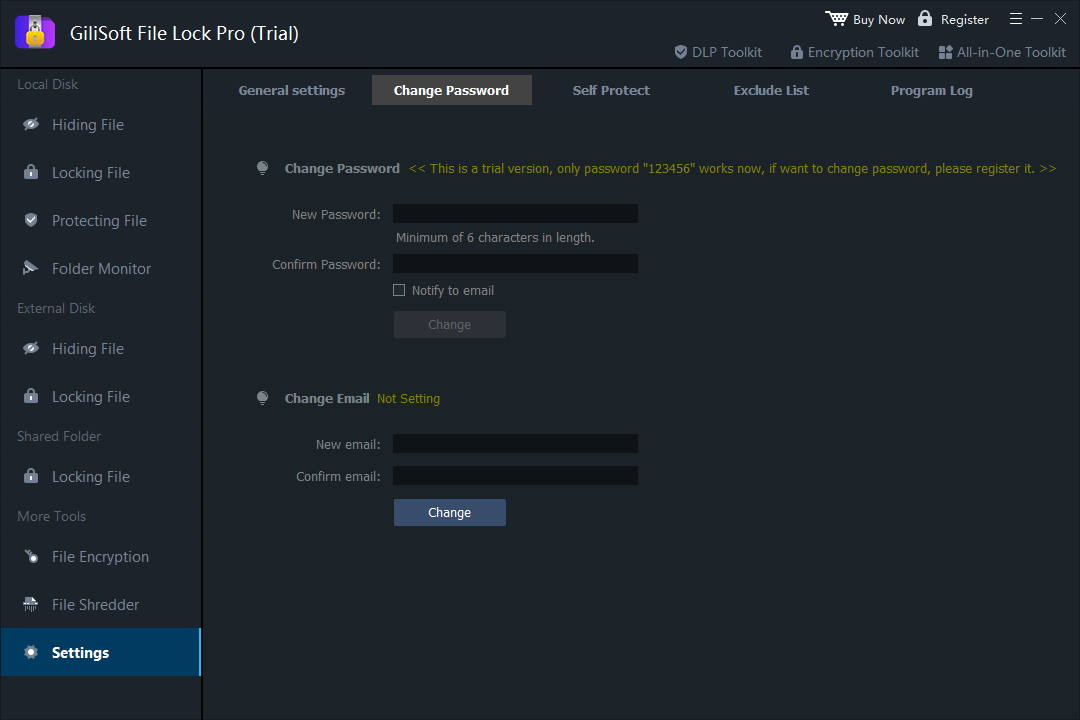
How to change the password and recovery email

Settings contains password and recovery email controls, self-protection options, exclude lists, and the File Lock Pro program log.

Change File Lock Pro password and recovery emailChange Password includes the master password and recovery email settings.
  1. Open Settings > Change Password.
  2. Enter and confirm the new master password.
  3. Set and confirm a recovery email.
  4. Review Self Protect before enabling stealth-related options.
  5. Use Exclude List and Program Log to keep protection manageable.
Set the recovery email before experimenting with stealth mode or changing the master password.

Common questions

Can File Lock Pro hide a whole drive?

Yes. Open Local Disk > Hiding File and use Hide Drive when the entire supported local drive should disappear from ordinary browsing.

Can I lock files on a USB drive?

Yes. Connect the USB drive, open External Disk, then choose Locking File or Hiding File according to the result you need.

Does Protect encrypt the file?

No. Protect is intended to restrict changes such as editing, deleting, renaming, moving, or writing. Use File Encryption when you need a separate encrypted GFL or EXE output.

What is the difference between GFL and EXE output?

GFL is File Lock Pro encrypted output. EXE output is packaged as an executable. Test the chosen output on the intended Windows environment before distribution.

What should I do before using stealth mode?

Set a recovery email, remember the access method and master password, and test the setting before hiding File Lock Pro shortcuts or entry points.

How can I prepare for password recovery?

Open Settings > Change Password and set a recovery email before access is lost. Keep important protected data backed up independently.

Related File Lock Pro guides

Need local file privacy on Windows?

Download File Lock Pro when you need one Windows tool for folder locking, file hiding, drive protection, encryption, shredding, and folder monitoring.